
Curiosity Eats Rejection for Breakfast
Five books in, I still remember the first real rejection like it happened yesterday. It didn't land as feedback on the work. It landed as proof of something older — that I wasn't enough, that I'd be left again. That's the part no one warns you about: rejection rarely stays the size it actually is. It reaches down and grabs whatever old wound is already sitting there, waiting.
For a long time, mine was abandonment. And once I could feel that clearly — really feel the difference between a rejected manuscript and a childhood wound wearing the manuscript as a disguise — everything about how I created started to shift.
This isn't a business article. It's for anyone who makes something and puts it out into the world to be judged: authors, filmmakers, painters, podcasters, musicians, founders, all of it. If you've ever felt a piece of your craft go quiet after someone rejected it, this is for you.
The Quote I Didn't Believe
Someone once said: what you think of me is none of my business. It's most often credited to Terry Cole-Whittaker, and it's been borrowed and repeated by half the self-help world since, because it's true — and brutally hard to actually live. I didn't believe it the first hundred times I heard it. Here's what nobody adds when they quote it: it's not really about other people. It's about where you're steering from when the rejection lands.
Where the Advice Usually Goes Wrong
Most advice here points you toward the externals — refine the pitch, study the algorithm, toughen up, submit to more places. Wrong direction entirely. The fix isn't managing what happens outside you. It's getting curious about what's happening inside you, underneath the work, before the work even exists.
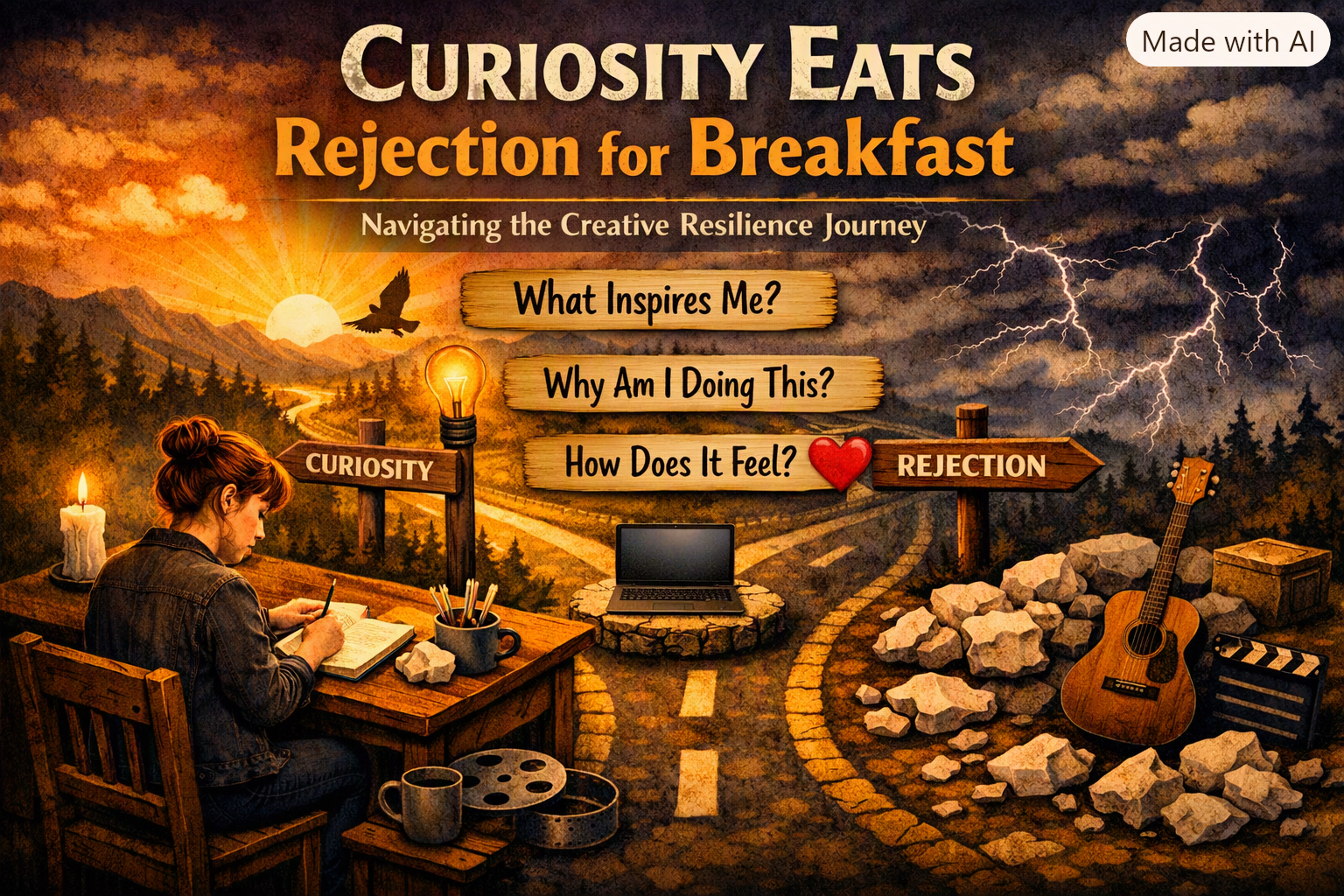
Three Questions Worth Asking Before You Create Anything
1. What inspires me most about what I do, and how do I co-create with my muse?
A painter freezes at the easel after a gallery passes on her last show. This question isn't "what technique excites me" — it's noticing the actual moment the image arrives, before she's touched the brush. That arrival isn't fully hers. Something meets her halfway.
2. Why am I doing this in the first place?
Is it survival — the mortgage, the next advance? Is it recognition? Or is it, underneath all of that, pure joy — the kind that would still be there if no one ever saw the work? None of these answers is wrong. But only one of them survives rejection intact.
3. How does my creative process feel in my body, mind, heart, and soul?
Not how the finished work feels when it's praised. How the making of it feels, moment to moment, regardless of outcome. A filmmaker who dreads the edit bay every morning is getting useful data here — the process itself is asking for something the externals can't answer.
Non-Attachment Isn't Indifference
This is the part people misunderstand most. Non-attachment doesn't mean you stop caring about the work. It means you stop needing the outcome to validate the process that produced it. The three questions above aren't a technique for feeling better about rejection. They're a redirection — toward the only part of the creative act that was ever actually yours: the curiosity, the joy, the felt sense of making. The externals — acceptance, rejection, applause, silence — were never yours to control in the first place.
Held loosely, the work can keep moving. Held tightly, every rejection becomes a referendum on your worth, and the craft goes quiet again.
I still catch my old wound trying to grab the wheel sometimes. The difference now is I notice it before it gets there.
When you sit down to create next, what's actually driving — your curiosity, or your wound?
~Adam
Adam C Hall is a published Author, Inspirational Speaker, and CEO/Co-Founder of TruGuide Inc.
Signup to receive weekly blog updates directly in your inbox and an ebook on Abundance as a free gift!
We respect your privacy and will never sell your info to third parties.